


How to Make Moroccan Mint Tea at Home
How to make Moroccan mint tea at home: gunpowder green tea, fresh spearmint and sugar, the rinse step, the high pour and easy variations…
Country, language & currency
The Tea Journal · Brewing Guides · Teaware
By the Tealyra Tea Team · · 5 min read

In short: to clean a tea kettle, fill it halfway with equal parts water and white vinegar (or 2 tablespoons of citric acid or the juice of 2 lemons per quart of water), bring it to a boil, let it sit 30 to 60 minutes, then empty, scrub lightly and boil plain water twice to rinse. Do it every 2 to 4 weeks if your water is hard. Rust spots in a steel or cast iron kettle need a paste of baking soda and a soft brush instead.
A clean kettle matters more than most tea drinkers think. White flakes of limescale, a cloudy film or a faint metallic taste can flatten a delicate green tea and make even a bold breakfast blend taste dull. The good news: it takes about 10 minutes of real work and things you already have in the kitchen.
Every kettle sees the same three problems, and each one has a different cause:
Limescale mainly changes how water tastes and it slows down heating, so your kettle works harder for every cup.
Pick the method that suits your kettle and what you have at home. All three work on stainless steel, glass and enamel kettles.
| Method | Mix (per 1 quart / 1 liter of water) | Soak time | Best for |
|---|---|---|---|
| White vinegar | Equal parts water and vinegar | 30-60 minutes | Heavy limescale |
| Citric acid | 2 tablespoons (about 25 g) | 20-30 minutes | Regular cleaning, no smell |
| Lemon | Juice of 2 lemons plus the halves | 60 minutes | Light scale, glass kettles |
| Baking soda | 1 tablespoon to a paste with water | 15 minutes | Outside stains, rust spots |
Glass is the easiest kettle to keep clean, because you can see every bit of scale. A stovetop-safe kettle such as our Glass Teapot & Kettle 60oz responds well to the lemon method: the glass sparkles again and there is no smell. Let the glass cool before you add cold water, as sudden changes in temperature are hard on any glassware. Clean the coiled steel spout filter with an old toothbrush.
If you also steep tea in your glass kettle, a tablespoon of baking soda in warm water lifts brown tannin rings in about 15 minutes. We cover more on looking after glass in our glass teapot guide.
A few rust spots don't mean the kettle is finished. What to do depends on the material:
Filtered water slows down limescale a lot, and it also helps tea taste the way the grower intended.
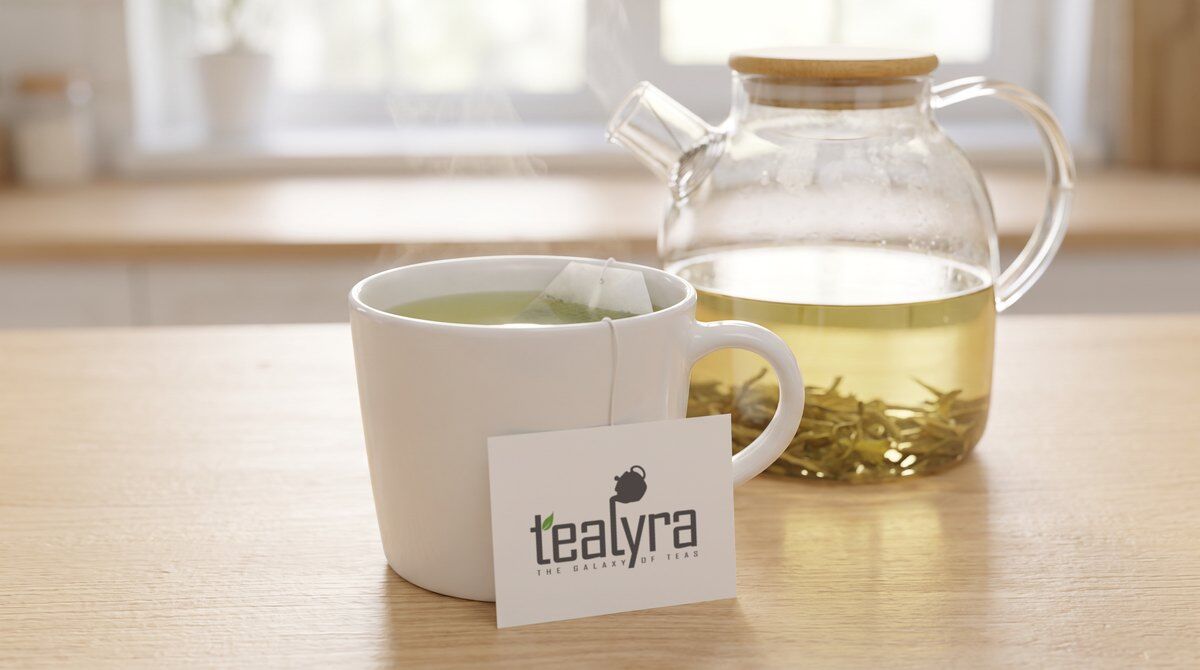
You'll taste the difference most with delicate teas. A spring green tea like Long Jing Dragon Well should be sweet, nutty and clean; brewed with water from a scaled kettle, it tastes flat. Heat water to 175°F (80°C) for green tea and explore more in our green tea collection.
The same goes for your teapot. A porcelain pot like the Daze Porcelain Teapot 44oz only needs a rinse with hot water after each pot and a baking soda soak once a month to keep its glaze bright. Browse more styles in our teapots section.
Yes, a water and white vinegar mix is a common way to descale stainless steel, glass and enamel kettles. Open a window for the smell and boil plain water twice afterward to rinse.
Use citric acid or vinegar, run one boil cycle, let it sit 20 to 30 minutes, then empty and rinse twice. Never submerge the base or the electric parts in water.
Limescale and old water standing in the kettle are the usual causes. Descale the kettle, use fresh filtered water every time and avoid reboiling the same water.
Yes. Lemon juice works well on light limescale and leaves a fresh smell. For thick crust, vinegar or citric acid works faster.
Not more often, but you'll notice scale sooner because you can see it. A quick lemon soak whenever white lines appear keeps it clear.
How to make Moroccan mint tea at home: gunpowder green tea, fresh spearmint and sugar, the rinse step, the high pour and easy variations…

What makes Taiwan high mountain oolong special, how to choose Ali Shan or Mei Shan, and how to brew it gongfu style or in a mug, with times…

Learn how to brew kombucha with loose leaf tea: the best black and green teas, exact ratios per gallon, step-by-step fermentation and easy…