


How to Make Moroccan Mint Tea at Home
How to make Moroccan mint tea at home: gunpowder green tea, fresh spearmint and sugar, the rinse step, the high pour and easy variations…
Country, language & currency
or
The Tea Journal · Brewing Guides · Green Tea
By the Tealyra Tea Team · · 5 min read

In short: genmaicha is Japanese green tea blended with toasted brown rice. It tastes mellow, nutty and gently savory, a little like fresh popcorn, with almost no bitterness. Brew about 4 g (a heaped teaspoon) per 8 oz (240 ml) of water at 175-185°F (80-85°C) for 1-2 minutes, and you can steep the same leaves two or three times.
If you have ever been served a pale, toasty-smelling green tea in a Japanese restaurant, there is a good chance it was genmaicha. It is one of the easiest green teas to love, even for people who find plain green tea too grassy.
The name says it all: genmai means brown rice and cha means tea. Genmaicha is a blend of green tea leaves, usually sencha or bancha, and rice grains that have been soaked, steamed and roasted until golden. During roasting some kernels burst open into small white puffs, which is why it is often nicknamed "popcorn tea."
The story most often told is that rice was first added to stretch expensive tea leaves further. Whatever its origin, genmaicha became an everyday tea in Japanese homes and is now enjoyed around the world for its comforting, cozy flavor.
You will find a few styles:
Genmaicha is all about balance. The green tea brings a fresh, slightly vegetal note, while the roasted rice adds warmth, sweetness and a toasty, nutty aroma. The liquor is pale yellow-green (deeper green if matcha is added) and very smooth.
Because the rice softens the tea, genmaicha is far more forgiving than sencha. A few extra seconds of steeping rarely make it harsh, which makes it a great choice if you are new to Japanese green tea. It also pairs naturally with food: try it with sushi, rice dishes, miso soup, roasted vegetables or a slice of toast with honey.
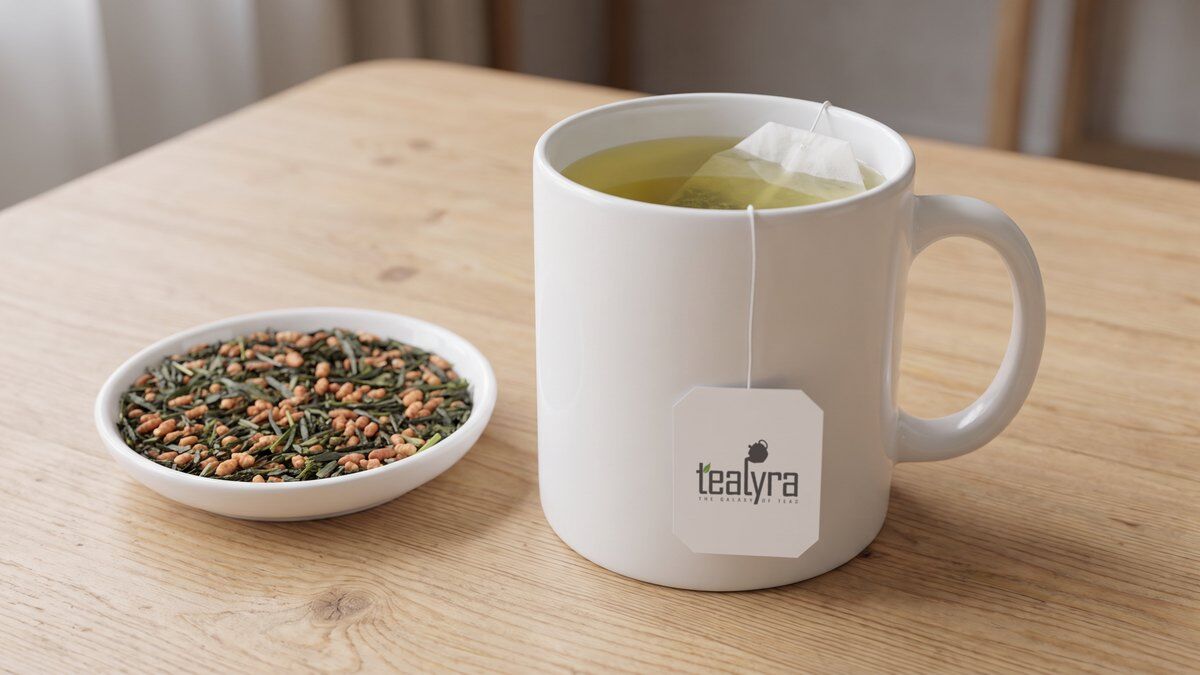
Use water that has cooled a little after boiling. Water that is too hot brings out bitterness in the green tea leaves, even if the rice still tastes great.
| Style | Tea per 8 oz (240 ml) | Water | First steep |
|---|---|---|---|
| Classic genmaicha | 4 g | 175-185°F (80-85°C) | 1-2 min |
| Matcha-iri genmaicha | 4 g | 175°F (80°C) | 45 sec-1 min |
| Gyokuro genmaicha | 4-5 g | 160-170°F (70-77°C) | 1-1.5 min |
| Cold brew (any style) | 8 g per 16 oz (480 ml) | Cold, filtered | 4-6 hours in the fridge |
Not sure how much leaf to use for your teapot? Our guide on how much loose leaf tea per cup has a quick chart for every tea type.
Genmaicha makes one of the best cold brew teas you can try. Cold water pulls out the sweet, toasty side of the rice and leaves the bitterness behind. Put 8 g of genmaicha in a jar with 16 oz (480 ml) of cold filtered water, refrigerate for 4-6 hours, strain and serve over ice. It keeps well in the fridge for a day.
For a warmer treat, try a genmaicha latte: brew a strong cup with 6 g of tea in 5 oz (150 ml) of water, then top with steamed milk or oat milk and a touch of honey.
All three are Japanese green teas, but they taste very different:
If you like the toasty side of genmaicha, hojicha is the next tea to try. If you want something fresher, move toward sencha.
You will find all three styles among our Japanese green teas, and many more leaves in the full green tea collection:
The roasted rice is what gives genmaicha its charm, and it is also the part that fades first. Keep the tea in an airtight, opaque container away from heat, light and strong smells (spices and coffee especially). Enjoy it within a few months of opening for the best toasty aroma. If the rice smells flat, a quick 1-2 minute warm-up in a dry pan can revive it.
Yes, but usually less than a cup of plain sencha, because about half of the blend is rice rather than tea leaves. Matcha-iri and gyokuro versions have a little more.
Some of the rice kernels pop during roasting and look like tiny pieces of popcorn. The toasty aroma adds to the nickname.
Most people drink it plain, since it is naturally smooth and slightly sweet. It does work well as a latte with milk or oat milk and a little honey.
Two or three times. Keep the second steep short, about 30-45 seconds, and the third slightly longer with hotter water. The rice flavor fades faster than the tea.
Very. Its mellow, nutty flavor and low bitterness make it one of the friendliest ways to start exploring Japanese green tea.
How to make Moroccan mint tea at home: gunpowder green tea, fresh spearmint and sugar, the rinse step, the high pour and easy variations…

Jasmine dragon pearls are hand-rolled tea scented with fresh jasmine blossoms. How they are made, how to brew them and how to spot…

Flowering tea turns steeping into a small display: a compact bundle opens in hot water to reveal flowers among the tea leaves.