


Japanese Green Tea: Types and How to Brew Each One
Japanese green tea types explained: sencha, gyokuro, bancha, kukicha, hojicha, genmaicha and matcha, how each tastes, and the water…
Country, language & currency
or
The Tea Journal · Green Tea · Matcha
By the Tealyra Tea Team · · 5 min read

In short: matcha is green tea, but not all green tea is matcha. Matcha is a powder ground from shade-grown Japanese tea leaves, whisked into water so you drink the whole leaf. Loose leaf green tea is steeped and strained, so you drink an infusion and leave the leaves behind. That one difference explains almost everything else: the deeper color, the thicker texture, the higher caffeine per cup and the higher price of matcha. Below is a side-by-side look at how each is made, how they taste, how to brew them and when to choose one over the other.
Both come from the same plant, Camellia sinensis, and both are "green" because the leaves are heated soon after picking to stop oxidation. Japanese producers steam the leaves; most Chinese green teas are pan-fired. From there the paths split.
Loose leaf green tea is rolled, dried and sold as whole or broken leaves. A Japanese sencha such as Fukujyu Sencha is steamed and rolled into flat, dark green needles. A Chinese Dragon Well is pressed flat in a hot wok. The leaf stays intact and you can see its shape in the cup.
Matcha starts as tencha: tea bushes are covered with shade cloth for three to four weeks before harvest, which slows growth and makes the leaves darker, sweeter and richer in amino acids. After steaming, the leaves are dried flat without rolling, the stems and veins are removed, and the remaining leaf is ground between granite stones into a powder finer than flour. Shading, de-stemming and slow grinding are why matcha costs more per gram than most loose leaf green tea.
| Matcha | Loose leaf green tea | |
|---|---|---|
| Form | Fine powder | Whole or broken leaves |
| Growing | Shade-grown 3 to 4 weeks before harvest | Mostly full sun (gyokuro and kabuse are shaded too) |
| How you drink it | Whisked into water, whole leaf consumed | Steeped and strained, leaves discarded |
| Caffeine per serving | About 60 to 70 mg for 2 g of powder | About 25 to 45 mg for 2 to 3 g of leaf |
| Taste | Thick, creamy, sweet-savory, grassy | Light, clear, grassy to nutty, sometimes marine |
| Texture | Opaque, frothy, slightly viscous | Clear, thin |
| Water temperature | 160 to 175°F (70 to 80°C) | 160 to 185°F (70 to 85°C) depending on the tea |
| Steeps per serving | One, nothing left to re-steep | Two to three |
| Shelf life once opened | 1 to 2 months, refrigerated | 6 to 12 months in a sealed tin |
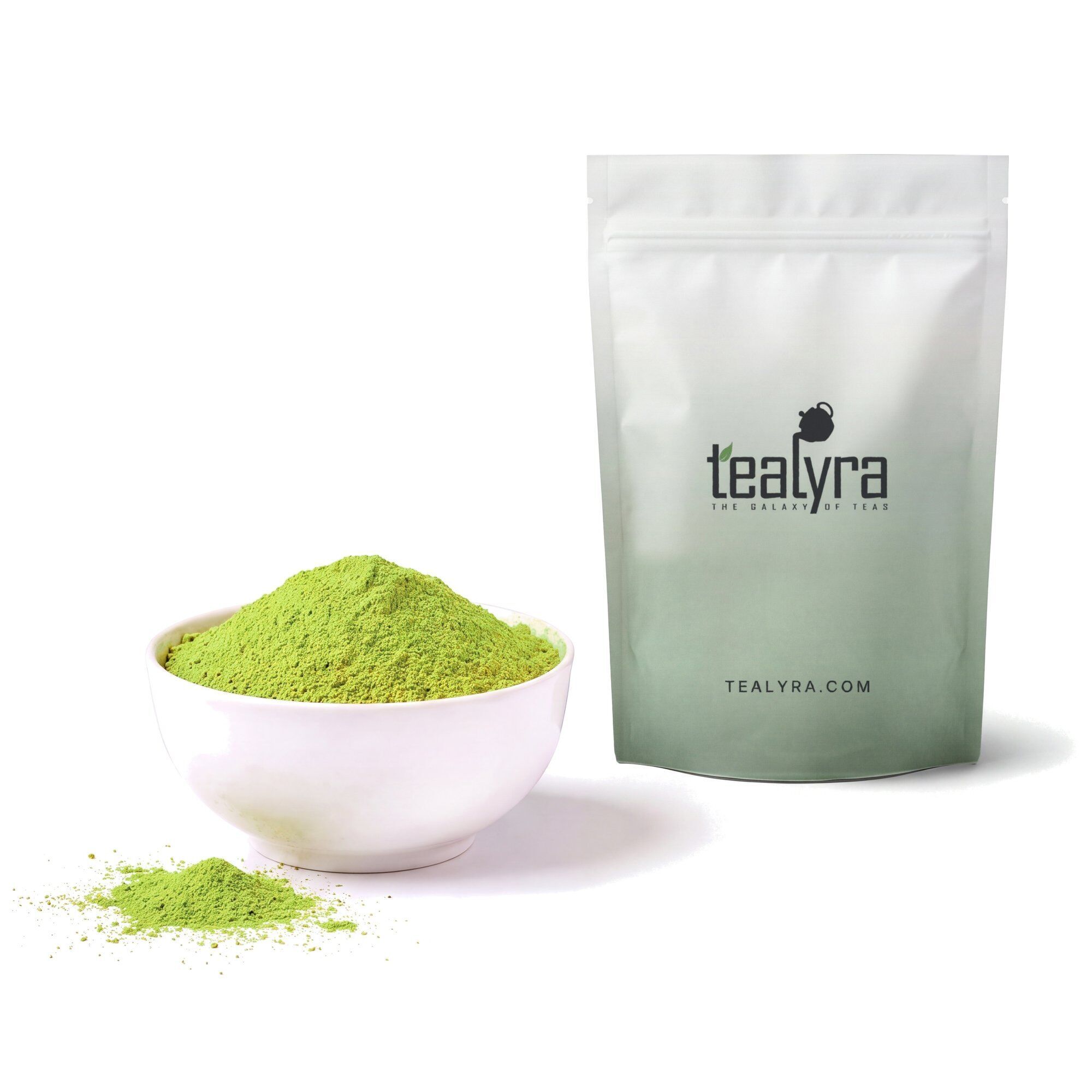
Because you drink the whole leaf, matcha tastes like a concentrated version of green tea. A good ceremonial grade such as Everyday Uji Matcha is smooth and sweet with a savory, broth-like depth (the umami that comes from shading) and a soft froth on top. Lower grades taste more bitter and grassy, which is fine under milk but harsh on its own.
Loose leaf green tea is lighter and more varied. A sencha is bright, grassy and a little astringent. A shaded gyokuro such as Gyokuro Premier gets close to matcha in sweetness and umami, but you still drink a clear infusion, so the texture stays thin and clean. Chinese greens lean toward chestnut, bean and toasted notes rather than seaweed.
A typical serving of matcha (2 g of powder, about a heaped teaspoon) has roughly 60 to 70 mg of caffeine, close to a small cup of coffee. A cup of loose leaf green tea made from 2 to 3 g of leaf usually lands between 25 and 45 mg, because only part of the caffeine passes into the water during a short steep. Shaded teas run higher than sun-grown ones, so a gyokuro sits at the top of the green tea range and a hojicha (roasted) at the bottom.
If you want green tea flavor with the least caffeine, choose a loose leaf tea and steep it once, briefly. If you want the most, matcha is the clear winner.
For a more detailed walk-through of whisking, see our post on how to make matcha tea.
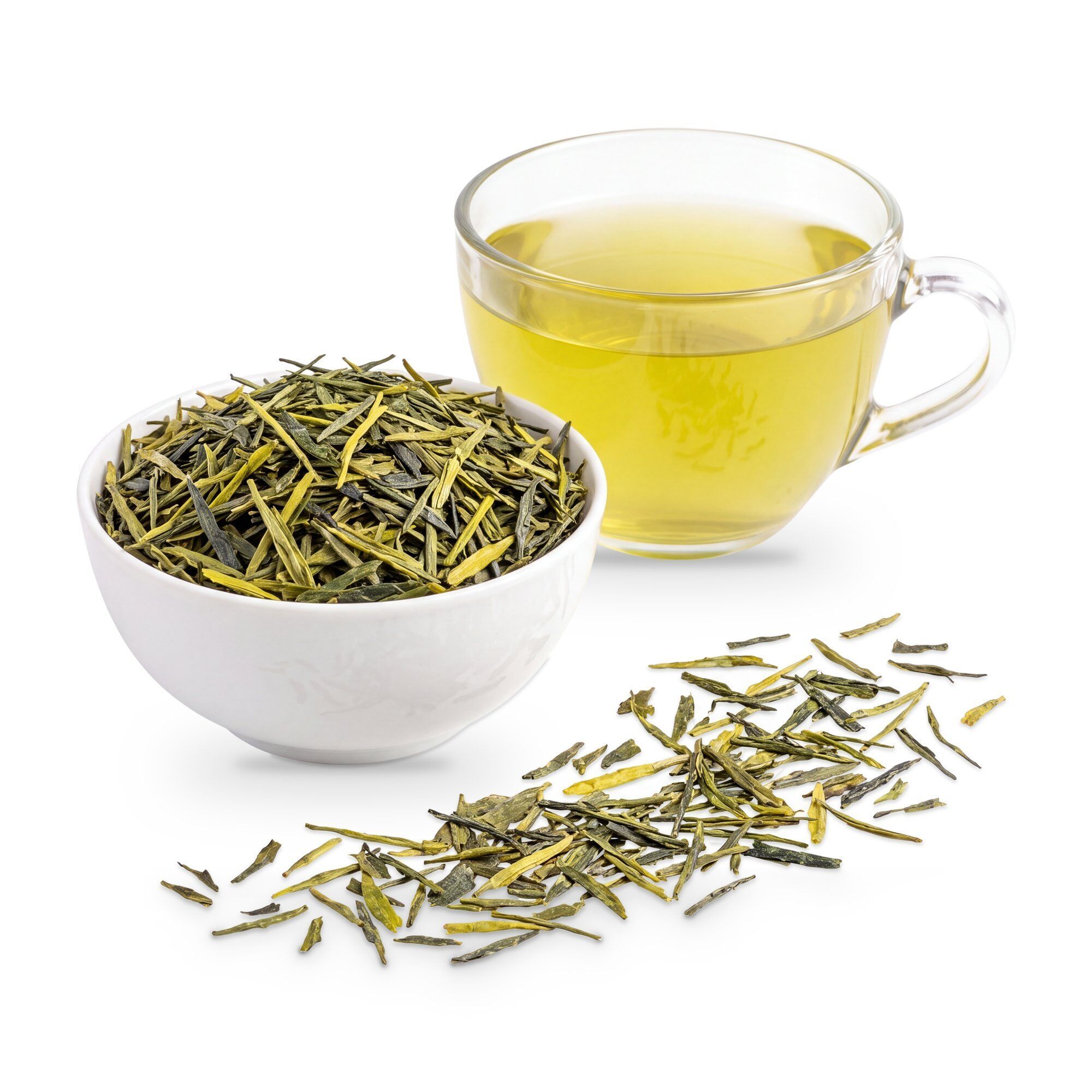
Many tea drinkers keep both: a tin of sencha for the teapot and a small pouch of matcha for the mornings when a latte sounds better than a cup.
Not quite. True matcha is made from shade-grown, de-stemmed tencha leaves ground on stone mills. Grinding ordinary sencha gives a coarse, bitter powder that does not froth and tastes very different.
Yes, in both taste and caffeine. A 2 g serving of matcha has about 60 to 70 mg of caffeine against 25 to 45 mg in a cup of steeped green tea, and the flavor is much more concentrated because you consume the whole leaf.
You can grind it, but the result will be gritty and harsh. If you want to try a shaded Japanese flavor without buying matcha, brew a gyokuro, which shares matcha's sweetness and umami.
Matcha. Whisk 2 g with a splash of hot water first, then add 6 to 8 oz (180 to 240 ml) of steamed or cold milk. Steeped green tea is too delicate to taste through milk.
Both dislike light, air and heat. Keep loose leaf green tea in an airtight tin away from the stove and use it within a year. Keep opened matcha sealed in the fridge and finish it within 4 to 8 weeks, as the powder loses color and freshness quickly.
Japanese green tea types explained: sencha, gyokuro, bancha, kukicha, hojicha, genmaicha and matcha, how each tastes, and the water…

Jasmine dragon pearls grades compared: leaf pluck, scenting rounds, pearl size and silver tips, and how our four grades differ in the cup…

Sencha explained: how Japan's everyday green tea is made, what it tastes like, the grades and steaming styles to know, and how to brew it…