


Spiced Apple Tea: A Warm Cup for Cold Days
Spiced apple tea for cold days: what goes into an apple cinnamon blend, how to brew it hot or as a stovetop mulled tea, three loose leaf…
Country, language & currency
or
The Tea Journal · Brewing Guides · Herbal Tea
By the Tealyra Tea Team · · 6 min read

In short: burdock root tea is a caffeine-free infusion made from the dried root of the burdock plant, the same root sold as gobo in Japanese grocery stores. Raw dried root brews a pale, earthy, mildly sweet cup with a vegetal edge; roasted root turns darker, nuttier and closer to a light coffee. Use 1 to 2 teaspoons (3 to 5 g) of cut root per 250 ml (8.5 oz) of water, bring it to a boil and simmer for 10 to 15 minutes, then strain. Most people enjoy burdock best in a blend, where cinnamon, licorice and dandelion root round out its earthiness.
Burdock is one of those roots that has been dug up and brewed for centuries across Europe and East Asia, yet many tea drinkers have never tasted it on its own. Here is what to expect in the cup, how the raw and roasted versions differ, how to brew both, and where burdock shows up in herbal teas you can buy today.
Burdock (Arctium lappa) is a tall, broad-leaved plant with purple thistle-like flowers and the sticky burrs that cling to socks and dog fur every late summer. Below ground it grows a long, slender taproot, brown outside and creamy white inside, that can reach 60 cm (2 ft) or more in its first year.
That root is a vegetable in Japan, Korea and China. In Japanese cooking it is called gobo and appears in kinpira gobo (shredded root stir-fried with carrot, soy and sesame) and in miso soup. Dried and cut into small pieces, the same root becomes burdock tea, called gobo-cha in Japan, where roasted burdock tea has been a popular caffeine-free drink since the 2010s.
For tea, the root is harvested, washed, sliced into thin rounds or small chips and dried. Some producers stop there (raw dried root); others roast the dried pieces until they turn deep brown.
Raw dried burdock makes a light straw-colored to pale amber infusion. The aroma is earthy and slightly sweet, a little like freshly dug carrots or parsnips. On the palate it is mild, with a gentle sweetness up front, a vegetal middle and a faint bitterness at the end that reads as clean rather than harsh. It rewards a longer simmer.
Roasted burdock is a different experience. The cup darkens to amber-brown, and the vegetal notes give way to toasted grain, nut skins and a hint of cocoa. If you like the roasty side of herbal teas, this is the version to try first.
| Raw dried root | Roasted root | |
|---|---|---|
| Color in the cup | Pale straw to light amber | Amber to deep brown |
| Aroma | Earthy, carrot, fresh soil | Toasted grain, nutty, light cocoa |
| Flavor | Mildly sweet, vegetal, clean bitter finish | Roasty, nutty, rounder, less vegetal |
| Body | Light | Medium |
| Best with | A squeeze of lemon, ginger, mint | Milk, cinnamon, a little honey |
| Caffeine | None | None |
Neither version contains caffeine. Burdock is unrelated to the tea plant, so it is a true caffeine-free cup whatever the hour.
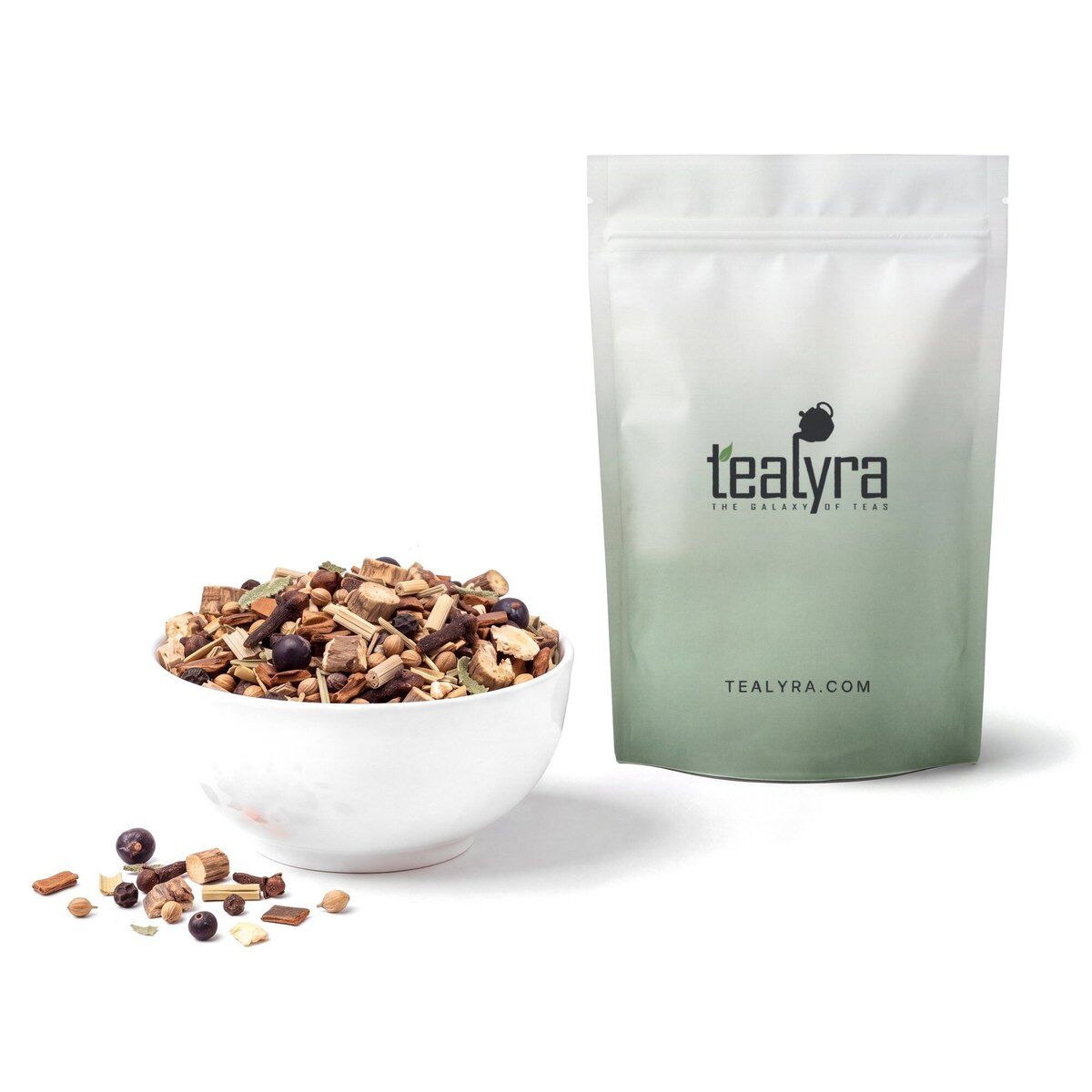
Roots give up their flavor slowly, so a quick steep in a mug under-delivers. A short simmer on the stove, or a long steep in a thermos, works far better. Here is the method we use.
If you only have a kettle and a mug, use 2 teaspoons per cup, pour water just off the boil (100 °C / 212 °F) over the root and steep covered for 15 to 20 minutes. A thermos works even better: add root and boiling water, close it, and drink after an hour.
Roasted burdock makes a surprisingly good cold brew. Use 10 g per liter (34 oz) of cold water, leave it in the fridge for 10 to 12 hours, strain and serve over ice. The result is dark, smooth and lightly nutty, a nice caffeine-free alternative to iced coffee.
Pure burdock root is a quiet tea. It is pleasant, but the earthy, faintly bitter character is not everyone's first love, which is why many traditional recipes pair it with other roots and warm spices.
Our Blood Cleanser is a good example of how burdock works in company. It is a caffeine-free herbal blend built on burdock root and dandelion root, with parsley, sage, fennel and turmeric, then sweetened and warmed with licorice, cinnamon, ginger, anise, cardamom, coriander, juniper berries, black pepper and cloves. The burdock and dandelion give it an earthy backbone, the licorice makes it naturally sweet, and the spices keep the finish fresh. People who find plain root teas bitter usually enjoy this one straight away.
If you prefer the roasty direction, Dandelion Root is burdock's closest relative in the cup: roasted, nutty and coffee-like. We covered it in detail in our dandelion root tea guide, and the two roots blend well together in equal parts.
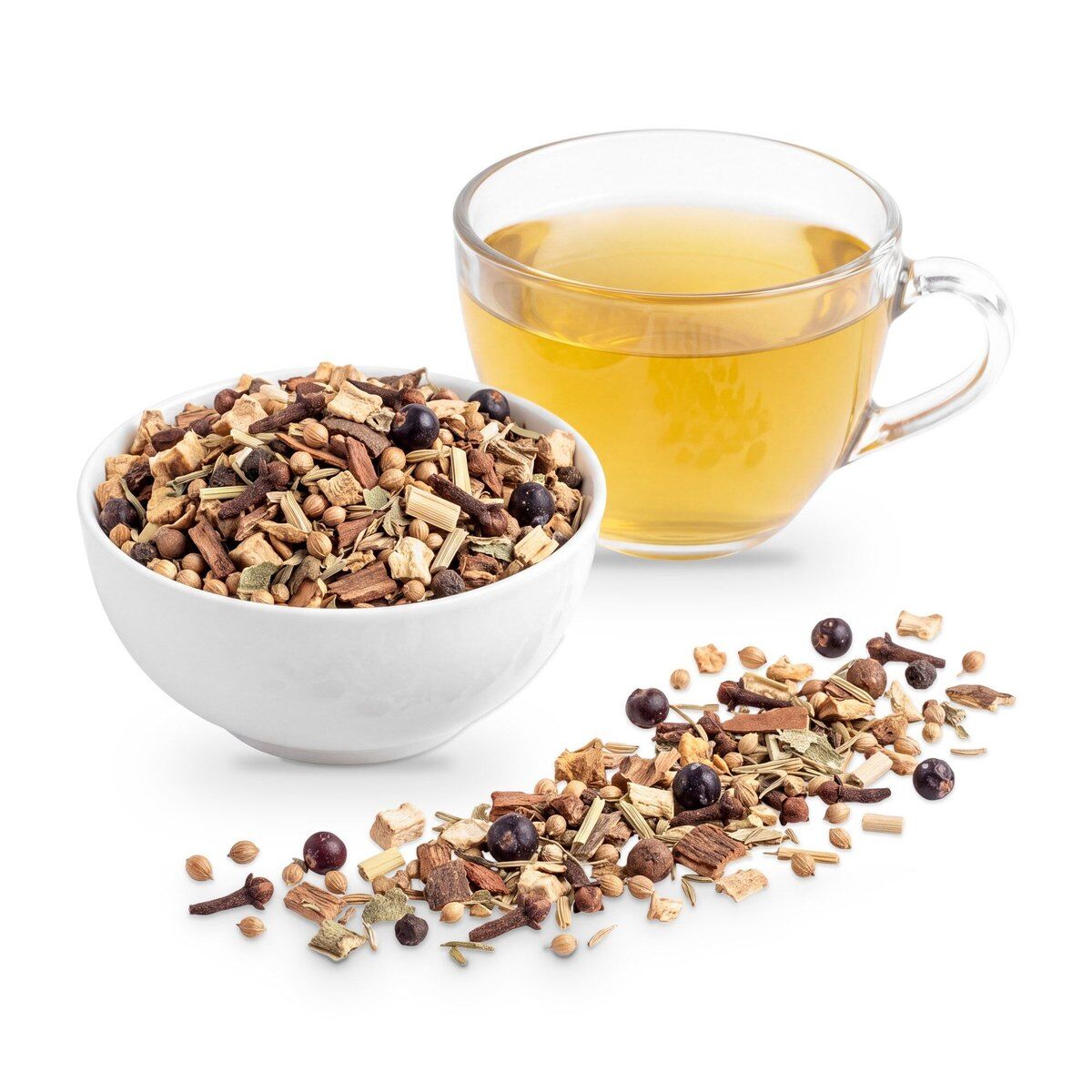
Raw dried burdock tastes earthy and mildly sweet with a vegetal middle and a clean, slightly bitter finish. Roasted burdock is nuttier and darker, with notes of toasted grain and a hint of cocoa, similar to roasted dandelion root or chicory.
No. Burdock is a root from the thistle family and is not related to the tea plant, so burdock root tea is completely caffeine-free, whether raw or roasted.
Simmer 1 to 2 teaspoons of cut root in 250 ml of water for 10 to 15 minutes, then rest 5 minutes and strain. In a mug, steep covered for 15 to 20 minutes with water just off the boil. The root can be simmered a second time.
Yes. Gobo is the Japanese name for burdock root, which is cooked as a vegetable in Japan and Korea. Dried and roasted, the same root is sold as gobo-cha, or burdock tea.
Roasted burdock takes milk well and makes a pleasant caffeine-free latte. Raw dried root is lighter and better plain or with lemon and ginger.
Spiced apple tea for cold days: what goes into an apple cinnamon blend, how to brew it hot or as a stovetop mulled tea, three loose leaf…

Rooibos vs honeybush: two caffeine-free South African teas compared by taste, aroma, color and brewing, with a side-by-side table and tips…

Butterfly pea flower tea brews a deep blue cup and turns purple with lemon. What it tastes like, how to brew it hot or iced, and how to…